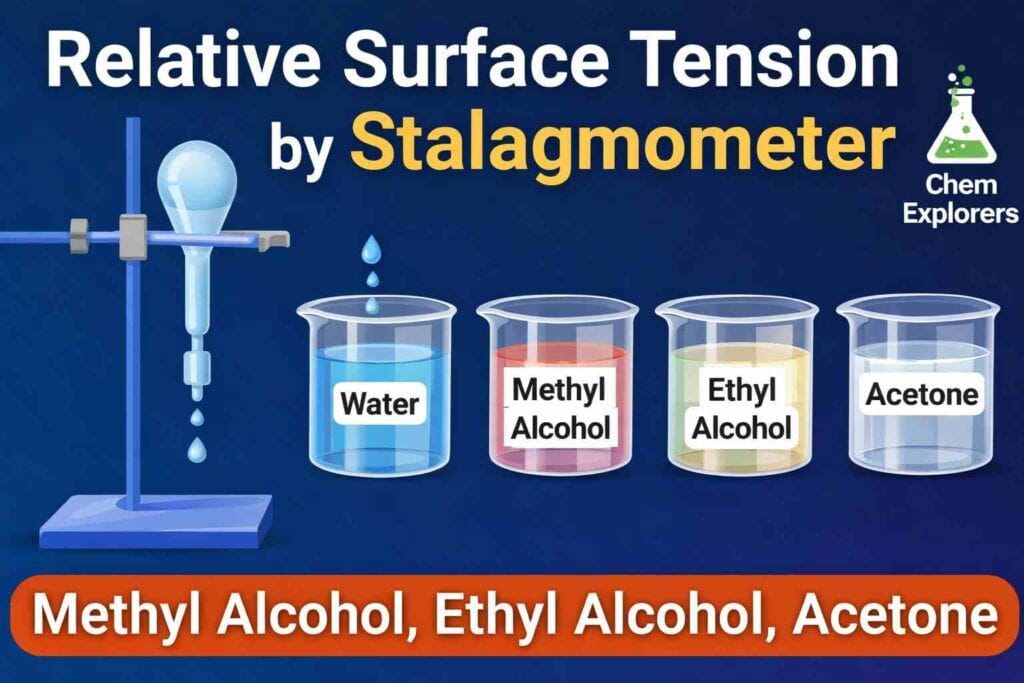
determine the surface tension of given liquid by stalagmometer
Relative Surface Tension of Liquids by Stalagmometer practical in Hindi with complete theory, apparatus, procedure, observation table, calculations, result and viva questions. Learn determination of surface tension of methyl alcohol, ethyl alcohol and acetone at room temperature for B.Sc. and M.Sc. chemistry practical.
Relative Surface Tension of Liquids by Stalagmometer
उद्देश्य (Aim)
Stalagmometer की सहायता से कमरे के तापमान पर methyl alcohol, ethyl alcohol तथा acetone के relative surface tension का निर्धारण करना।
सिद्धांत (Theory)
किसी द्रव की सतह पर उपस्थित अणुओं पर अंदर की ओर आकर्षण बल कार्य करता है जिसके कारण द्रव की सतह सिकुड़कर न्यूनतम क्षेत्रफल ग्रहण करने का प्रयास करती है। इस घटना को Surface Tension (पृष्ठ तनाव) कहते हैं।
Surface tension को सामान्यतः इस प्रकार परिभाषित किया जाता है:
द्रव की सतह पर खींची गई किसी काल्पनिक रेखा की प्रति इकाई लंबाई पर कार्य करने वाला बल Surface Tension कहलाता है।
Surface tension का SI मात्रक Newton per meter (N/m) होता है।
जब कोई द्रव किसी पतली नली (capillary tube) से बूंदों के रूप में गिरता है तो प्रत्येक बूंद के टूटने से पहले उसका भार उस द्रव के surface tension से संतुलित होता है। यदि दो अलग-अलग द्रवों के समान आयतन से बनने वाली बूंदों की संख्या ज्ञात हो तो उनके surface tension का अनुपात ज्ञात किया जा सकता है।
इस सिद्धांत का उपयोग Stalagmometer method में किया जाता है।
Stalagmometer
Stalagmometer एक कांच का उपकरण होता है जिसमें एक bulb तथा एक capillary tube होती है। इसमें दो निशान (marks) बने होते हैं जिनके बीच का आयतन निश्चित होता है। इस आयतन से गिरने वाली बूंदों की संख्या गिनकर surface tension निकाला जाता है।
यदि
- n1 = reference liquid (पानी) की बूंदों की संख्या
- n2 = test liquid की बूंदों की संख्या
- ρ1 = पानी का घनत्व
- ρ2 = परीक्षण द्रव का घनत्व
तो relative surface tension का सूत्र होता है:
जहाँ
γ1 = पानी का surface tension
γ2 = परीक्षण द्रव का surface tension
Surface tension तापमान पर निर्भर करता है। तापमान बढ़ने पर surface tension सामान्यतः कम हो जाता है क्योंकि अणुओं की गतिज ऊर्जा बढ़ जाती है और intermolecular attraction कम प्रभावी हो जाता है।
इस प्रयोग में हम water को reference liquid मानकर methyl alcohol, ethyl alcohol और acetone का relative surface tension ज्ञात करते हैं।
आवश्यक उपकरण (Apparatus)
- Stalagmometer
- Retort stand
- Rubber tube
- Beakers
- Thermometer
- Pipette
- Stop watch
आवश्यक रसायन (Chemicals)
- Distilled water
- Methyl alcohol
- Ethyl alcohol
- Acetone
प्रयोग की विधि (Procedure)
- सबसे पहले stalagmometer को अच्छी तरह distilled water से धो लें।
- उसे retort stand में सीधा लटका दें।
- Rubber tube की सहायता से पानी को stalagmometer में ऊपर तक भरें।
- द्रव को धीरे-धीरे नीचे आने दें जब तक कि meniscus ऊपर वाले निशान तक न पहुँच जाए।
- अब ऊपर और नीचे के निशानों के बीच बनने वाली बूंदों की संख्या गिनें।
- यह प्रक्रिया कम से कम तीन बार दोहराएँ और औसत निकालें।
- अब stalagmometer को साफ करके उसमें methyl alcohol भरें।
- उसी प्रकार ऊपर और नीचे के निशान के बीच गिरने वाली बूंदों की संख्या गिनें।
- यही प्रक्रिया ethyl alcohol और acetone के लिए भी करें।
- सभी observations को तालिका में लिखें।
प्रेक्षण तालिका (Observation Table)
Temperature of experiment = 25°C
For Water (Reference liquid)
| Trial | Number of Drops |
|---|---|
| 1 | 52 |
| 2 | 51 |
| 3 | 53 |
Average number of drops (n₁) = 52
Density of water (ρ₁) = 1.0 g/cm³
For Methyl Alcohol
| Trial | Number of Drops |
|---|---|
| 1 | 74 |
| 2 | 72 |
| 3 | 73 |
Average drops (n₂) = 73
Density (ρ₂) = 0.79 g/cm³
For Ethyl Alcohol
| Trial | Number of Drops |
|---|---|
| 1 | 70 |
| 2 | 69 |
| 3 | 71 |
Average drops (n₂) = 70
Density = 0.789 g/cm³
For Acetone
| Trial | Number of Drops |
|---|---|
| 1 | 80 |
| 2 | 79 |
| 3 | 81 |
Average drops (n₂) = 80
Density = 0.79 g/cm³
गणना (Calculations)
For Methyl Alcohol
Formula:
Relative surface tension = 0.56
For Ethyl Alcohol
Relative surface tension = 0.58
For Acetone
Relative surface tension = 0.51
परिणाम (Result)
Stalagmometer की सहायता से विभिन्न द्रवों का relative surface tension निम्न प्रकार प्राप्त हुआ:
| Liquid | Relative Surface Tension |
|---|---|
| Methyl alcohol | 0.56 |
| Ethyl alcohol | 0.58 |
| Acetone | 0.51 |
इससे स्पष्ट है कि पानी का surface tension इन सभी द्रवों से अधिक होता है।
सावधानियाँ (Precautions)
- Stalagmometer पूरी तरह साफ होना चाहिए।
- उपकरण को बिल्कुल सीधा रखा जाना चाहिए।
- बूंदों को धीरे-धीरे बनने दें।
- बूंदों की गिनती सावधानी से करें।
- तापमान स्थिर होना चाहिए।
त्रुटि के स्रोत (Sources of Error)
- बूंदों की गलत गिनती
- stalagmometer का ठीक से साफ न होना
- तापमान में परिवर्तन
- द्रव का अशुद्ध होना
वाइवा प्रश्न (Viva Questions)
1. Surface tension क्या है?
द्रव की सतह पर प्रति इकाई लंबाई पर कार्य करने वाला बल surface tension कहलाता है।
2. Surface tension का SI unit क्या है?
Newton per meter (N/m)
3. Stalagmometer क्या है?
यह surface tension मापने का एक उपकरण है।
4. Surface tension तापमान पर कैसे निर्भर करता है?
तापमान बढ़ने पर surface tension घटता है।
5. Water का surface tension अधिक क्यों होता है?
Water molecules में strong hydrogen bonding होती है।