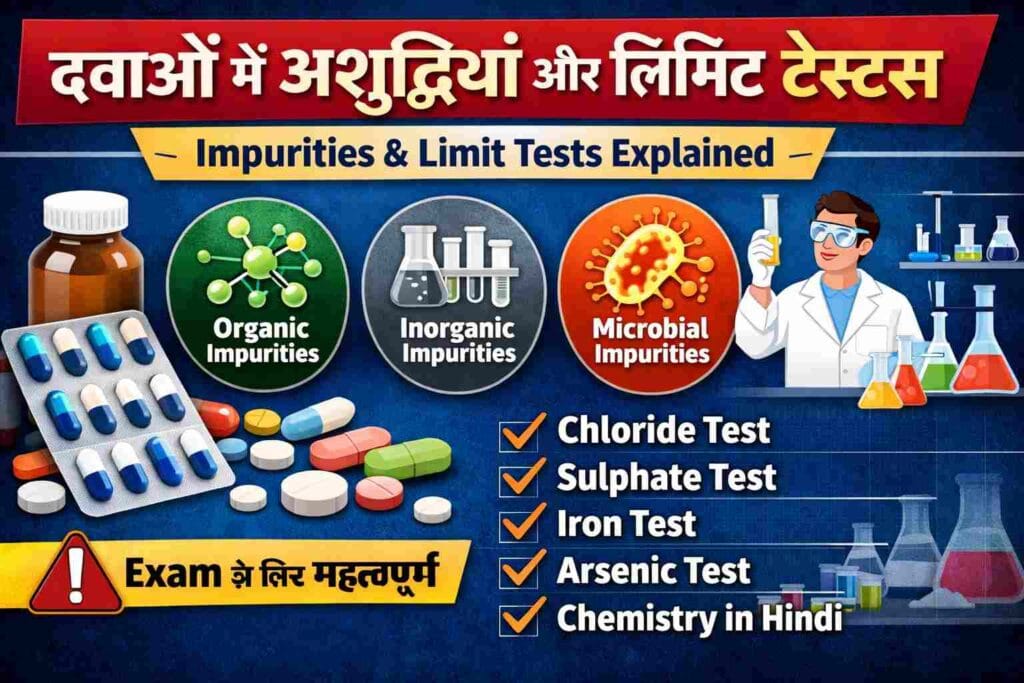
B.Sc. 1 Year Major 1 Pharma Unit II Module 1
Impurities in Pharmaceutical Substances
(औषधीय पदार्थों में अशुद्धियाँ)**
Is Article Ko Audio Form me sunne ke liye niche audio pe click kare|
1. Impurities की परिभाषा (Definition of Impurities)
फार्मास्यूटिकल पदार्थों (Medicines / Drugs) को शुद्ध (pure) होना चाहिए, क्योंकि इन्हें सीधे मानव शरीर में प्रयोग किया जाता है।
लेकिन practically कोई भी रसायन 100% शुद्ध नहीं होता। दवा में मौजूद वे अनचाहे पदार्थ, जो उसकी गुणवत्ता, सुरक्षा और प्रभाव को प्रभावित कर सकते हैं, उन्हें Impurities (अशुद्धियाँ) कहा जाता है।
सरल शब्दों में
👉 Impurity वह पदार्थ है जो दवा में गलती से या प्रक्रिया के कारण मिल जाता है, लेकिन दवा का हिस्सा नहीं होना चाहिए।
उदाहरण
- यदि Sodium Chloride injection में थोड़ी मात्रा में Iron मिल जाए, तो वह impurity कहलाएगी।
- Calcium carbonate में यदि Magnesium salts मिल जाएँ, तो वे अशुद्धियाँ हैं।
👉 इसलिए दवाओं में impurities को control करना बहुत जरूरी होता है।
**2. Sources of Impurities
(अशुद्धियों के स्रोत)**
दवाओं में impurities कई कारणों से आ सकती हैं। इन्हें समझना इसलिए जरूरी है ताकि इन्हें रोका जा सके।
(i) Raw Materials से Impurities
कई दवाएँ natural sources या chemical raw materials से बनती हैं। यदि raw material शुद्ध नहीं है, तो impurities सीधे दवा में आ जाएँगी।
उदाहरण
- Zinc oxide बनाने में यदि zinc metal अशुद्ध हो
- Plant-based drugs में मिट्टी, धूल, धातुएँ
(ii) Manufacturing Process के दौरान
Manufacturing के समय कई chemical reactions होती हैं।
अगर reaction complete न हो, तो कुछ पदार्थ बच जाते हैं।
उदाहरण
- Incomplete reaction से unreacted chemicals
- By-products का बनना
👉 ये सब impurities बन जाती हैं।
(iii) Solvents और Reagents से
Reaction में प्रयोग किए गए solvents और reagents भी impurity का कारण बनते हैं।
उदाहरण
- Alcohol, acetone जैसे solvents का residue
- Acid या alkali का trace amount
(iv) Equipment और Containers से
दवाएँ जिन बर्तनों या मशीनों में बनती या रखी जाती हैं, उनसे भी impurities आ सकती हैं।
उदाहरण
- Iron container से iron impurity
- Glass container से alkali leaching
(v) Storage Conditions
गलत storage से दवा खराब हो सकती है।
उदाहरण
- Moisture से hydrolysis
- Light से decomposition
- Air से oxidation
(vi) Accidental या Deliberate Adulteration
कभी-कभी जानबूझकर या गलती से सस्ता पदार्थ मिला दिया जाता है।
उदाहरण
- Powdered drug में chalk powder मिलाना
**3. Types of Impurities
(अशुद्धियों के प्रकार)**
Impurities को कई प्रकारों में बाँटा गया है:
(i) Organic Impurities
ये carbon वाले compounds होते हैं।
उदाहरण
- Unreacted organic chemicals
- Decomposition products
(ii) Inorganic Impurities
ये inorganic salts या metals होते हैं।
उदाहरण
- Chloride, Sulphate
- Iron, Lead, Arsenic
(iii) Residual Solvents
Manufacturing में प्रयोग किए गए solvents।
उदाहरण
- Alcohol
- Ether
- Chloroform
(iv) Microbial Impurities
Microorganisms की contamination।
उदाहरण
- Bacteria
- Fungi
**4. Limit Test
(सीमा परीक्षण)**
Limit Test क्या है?
Limit test एक simple chemical test है जिससे यह पता लगाया जाता है कि कोई impurity allowed limit के अंदर है या नहीं।
👉 इसमें exact amount नहीं, बल्कि comparison किया जाता है।
Principle of Limit Test
- Sample solution की तुलना standard solution से की जाती है।
- यदि sample का colour / turbidity standard से ज्यादा नहीं है → sample pass।
- ज्यादा है → fail।
5. Limit Test for Chloride
Principle
Chloride ion जब Silver nitrate (AgNO₃) से react करता है, तो white precipitate (AgCl) बनता है।
👉 Turbidity की तुलना standard से की जाती है।
Reaction
Cl⁻ + Ag⁺ → AgCl (white precipitate)
Importance
- Chloride अधिक होने से injection painful हो सकता है।
- Stability प्रभावित होती है।
6. Modified Limit Test for Chloride
कुछ पदार्थों में colour या turbidity पहले से होती है, इसलिए normal test सही result नहीं देता।
👉 ऐसे में Modified test किया जाता है।
Modification
- Sample को neutralize करना
- Blank test का उपयोग
- Proper dilution
7. Limit Test for Sulphate
Principle
Sulphate ion जब Barium chloride से react करता है, तो white precipitate (BaSO₄) बनता है।
SO₄²⁻ + Ba²⁺ → BaSO₄
Comparison
Sample की turbidity को standard से compare किया जाता है।
8. Modified Limit Test for Sulphate
अगर sample coloured हो या interference हो, तो:
- Acid medium use किया जाता है
- Controlled conditions रखी जाती हैं
9. Limit Test for Iron
Principle
Iron, thioglycolic acid के साथ react करके pink / purple colour बनाता है।
👉 Colour intensity compare की जाती है।
Importance
- Iron toxicity
- Drug stability पर effect
10. Limit Test for Arsenic
Principle
Arsenic को arsine gas (AsH₃) में convert किया जाता है, जो mercuric chloride paper पर yellow stain बनाता है।
👉 Stain की intensity standard से compare की जाती है।
Why important?
- Arsenic अत्यंत विषैला (highly toxic) है।
- Very small amount भी dangerous।
11. Limit Test for Lead
Principle
Lead, dithizone reagent से react करके pink / red colour बनाता है।
👉 Colour comparison किया जाता है।
Importance
- Nervous system damage
- Children के लिए अत्यधिक खतरनाक
12. Limit Test for Heavy Metals
Heavy Metals क्या हैं?
Lead, Mercury, Cadmium, Arsenic आदि।
Principle
Heavy metals, sulphide ions के साथ react करके dark coloured sulphides बनाते हैं।
👉 Colour intensity compare की जाती है।
13. Importance of Impurity Control
- Patient safety
- Drug efficacy
- Shelf life
- Regulatory approval
निष्कर्ष (Conclusion)
Pharmaceutical substances में impurities को completely remove करना संभव नहीं, लेकिन उन्हें safe limit में रखना जरूरी है।
Limit tests एक simple, economical और reliable method हैं जो यह सुनिश्चित करते हैं कि दवा मानव उपयोग के लिए सुरक्षित है।
👉 यही कारण है कि Impurities और Limit Tests फार्मास्यूटिकल के foundation topics माने जाते हैं।